
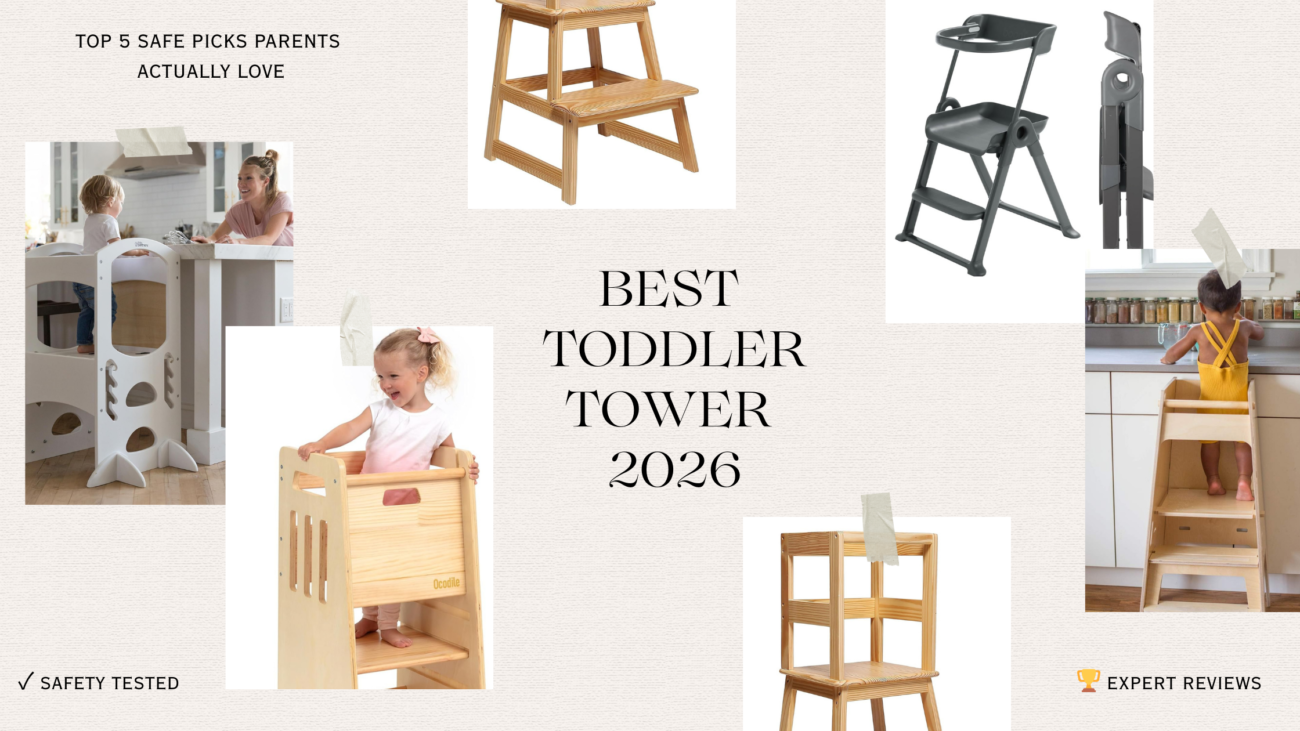
Look, I’m not going to sugarcoat this. Parenthood is exhausting. Between the constant demands of “Up! Up!” and the heart stopping moments of watching your toddler scale furniture like a tiny mountaineer, you’ve probably wondered if there’s a better way. That’s exactly where I found myself six months ago, standing in my kitchen with my 18 month old clinging to my leg while I tried to make dinner one handed.Enter the toddler tower, also called a learning tower or kitchen helper stool.
If you haven’t heard of these yet, you’re in for a treat. But here’s the thing: not all toddler towers are created equal, and some can actually be dangerous (yes, really). After months of research and testing, I’m going to walk you through everything you need to know about finding the perfect toddler tower for your family.
The Real Problems You’re Facing Right Now (I’ve Been There)
Before we dive into solutions, let’s talk about what’s actually happening in your kitchen and why you’re probably searching for answers at 11 PM after another chaotic dinner prep.
Problem #1: Your Back Is Screaming
You know that dull ache that’s become your constant companion? That’s from holding a 25-pound toddler on your hip while trying to stir pasta, chop vegetables, or just get them a cup of water. According to child development experts, toddlers between 18 months and 3 years are in their peak curiosity phase—they want to see, touch, and be part of everything you’re doing. But our kitchens weren’t designed for people under three feet tall.
Problem #2: The Climbing Olympics Are Terrifying
Here’s the scarier reality: When toddlers can’t reach what they want, they improvise. Dining chairs become launch pads, drawer handles turn into makeshift ladders, and suddenly you’re having mini heart attacks every five minutes. Recent safety data shows that accidents involving furniture climbing are one of the leading causes of emergency room visits for toddlers. A regular step stool doesn’t help because there’s nothing stopping your child from tumbling right off.
Problem #3: Missing Critical Development Opportunities
Every time we cook, clean, or do tasks at counter height without our kids, we’re missing golden learning moments. Research in early childhood development consistently shows that toddlers build essential motor skills, confidence, and independence through hands-on participation in real daily activities. Those little hands want to pour, stir, wash dishes, and mix ingredients—and these aren’t just fun activities. They’re laying the foundation for lifelong skills and self-sufficiency.
Problem #4: The Independence Battle
Around 18 months, toddlers enter what experts call the “autonomy phase.” Their favorite phrase becomes “Me do it!” This isn’t just stubbornness (though it can feel that way at 6 AM). It’s a crucial developmental stage where they’re learning they’re separate people who can affect their environment. But without safe ways to participate in daily tasks, this natural drive for independence turns into frustration for everyone.
Problem #5: Regular Step Stools Are Accidents Waiting to Happen
You might think, “Can’t I just use a regular step stool?” The short answer is no, not safely. Standard step stools lack the protective barriers that keep toddlers secure. One excited wiggle, one moment of distraction, and your child could easily topple backward or sideways. Learning towers address this with four-sided safety rails that create a secure platform.
What Makes a Toddler Tower Different (And Why It Actually Works)
A toddler tower is essentially a safe, enclosed platform that elevates your child to counter height. Think of it as a protective fortress that happens to give your toddler the boost they desperately want. The best designs feature sturdy construction, four-sided guardrails, wide bases for stability, and adjustable heights that grow with your child.
But here’s what makes them genuinely life-changing: They transform your toddler from an obstacle to a helper. Instead of fighting the “I want to help” instinct, you’re enabling it safely. Your child can wash vegetables, pour premeasured ingredients, help with simple meal prep, or just watch and learn while you cook. You get your hands back, your back gets a break, and your toddler gets the independence they’re craving.
The Safety Reality You Need to Know Before Buying
I’m going to be straight with you about something important: Recent testing by Consumer Reports revealed that 13 out of 16 popular toddler towers failed stability tests. This isn’t meant to scare you away from toddler towers—it’s meant to make you a smarter buyer.
Here’s what testing revealed:
Stability issues are widespread. When testers simulated toddlers leaning or shifting weight to one side, most towers tipped too easily. The problem usually comes down to narrow bases, lightweight construction, or designs that put aesthetics over engineering.
Entrapment hazards exist. Those cute decorative cutouts in the sides? They can become dangerous if a child’s body slips through but their head gets stuck. Safety experts recommend avoiding towers with large gaps or decorative openings.
Not all towers are built equally. Some manufacturers prioritize looks and low prices over safety standards. Since there are currently no federal safety standards specifically for toddler towers, the quality varies dramatically between brands.
The Top 5 Toddler Towers Actually Worth Your Money (Amazon Links)
After extensive research and comparing dozens of options, here are the five toddler towers that consistently earn top marks for safety, functionality, and real-world performance. I’ve arranged these from most recommended to still-excellent alternatives.
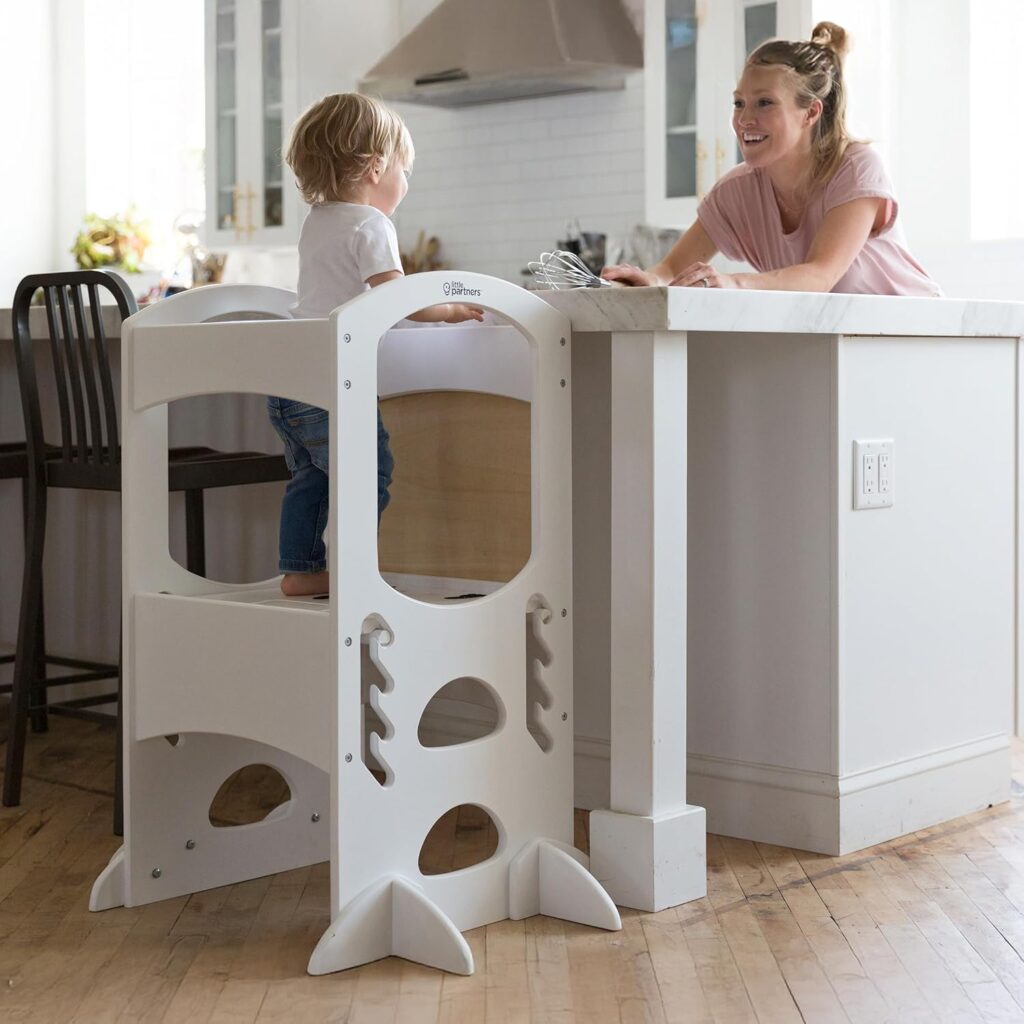
1. Little Partners Original Learning Tower
Amazon Link: Click Here
Why it’s our top pick: This tower has earned its reputation as the gold standard for good reason. It features four-sided safety rails, adjustable height settings that grow with your child from 18 months to age 6, and most importantly, anti-tip feet that provide extra stability. The solid wood construction means it’ll survive years of daily use (and probably multiple kids).
What parents love: The tower adjusts to four different heights, so it works whether your toddler is just starting to stand confidently or is already a preschooler. Parents consistently report it feels incredibly sturdy, even with active, bouncy toddlers. The natural wood finish fits into almost any kitchen aesthetic.
What to consider: This isn’t a compact tower. If you have a tiny kitchen, it might feel large. It’s also on the heavier side, which is actually a safety feature but makes it harder to move between rooms. The price point is higher than some alternatives, but most parents say it’s worth every penny for the quality and longevity.
Best for: Families who want a tower that’ll last through multiple children, prioritize stability above all else, and have moderate to large kitchen spaces.
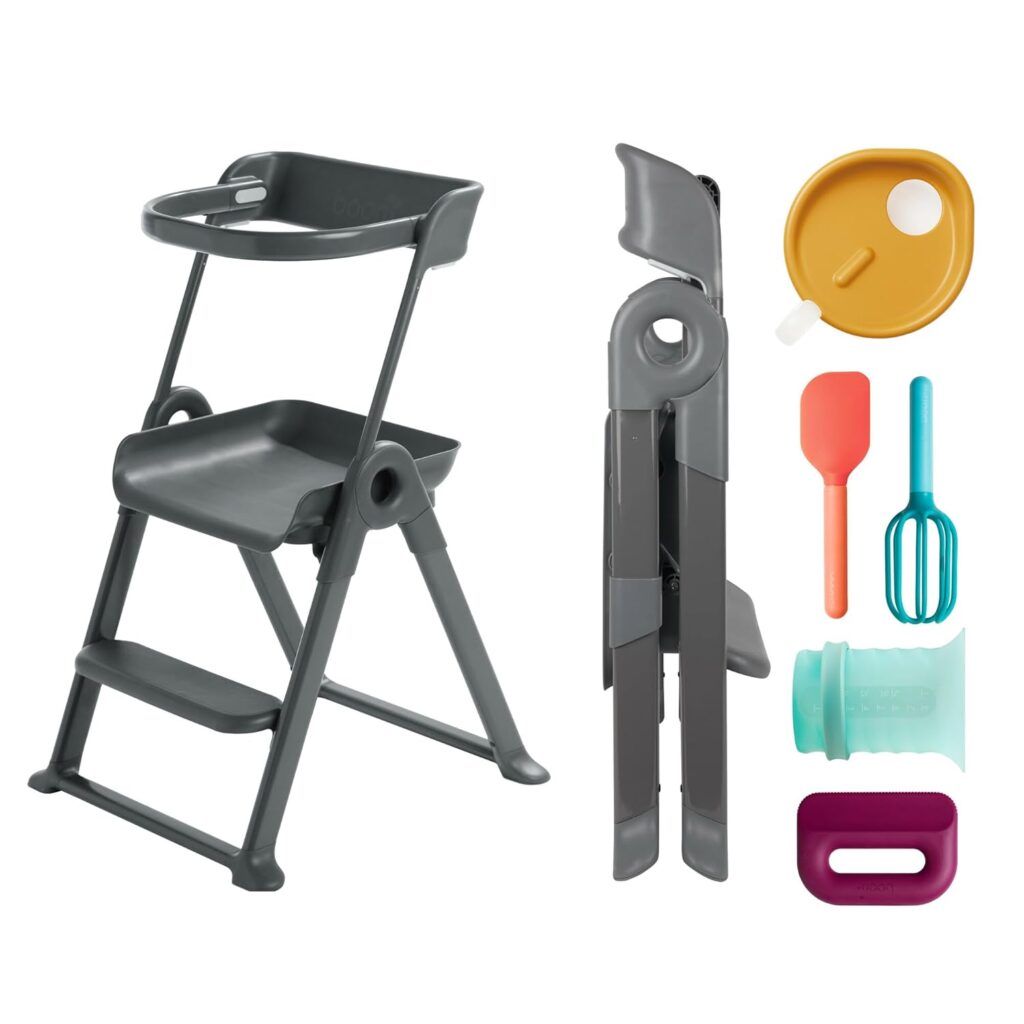
2. Boon PIVOT Foldable Learning Tower
Amazon Link: Click Here
Why it made our list: The PIVOT solves one of the biggest complaints about toddler towers—storage. This design folds completely flat when not in use, making it perfect for smaller homes or kitchens where counter space is precious. But what really impressed me is that it doesn’t sacrifice safety features for the folding capability. It has 4.8 stars on Amazon and is consistently one of the most-purchased towers.
What parents love: The easy-clean surface is a huge win for messy cooking sessions. The fold-up design means you can tuck it away when relatives visit or when you need the floor space. Despite being foldable, it still feels secure and stable when locked in place. The non-slip feet keep it firmly planted during use.
What to consider: Some parents note that the sides are more open than enclosed towers, which might not work for younger or more adventurous climbers. The weight limit is lower than some alternatives, so taller or bigger kids might outgrow it faster.
Best for: Small kitchens, apartments, or families who want flexibility to store the tower when it’s not in use.
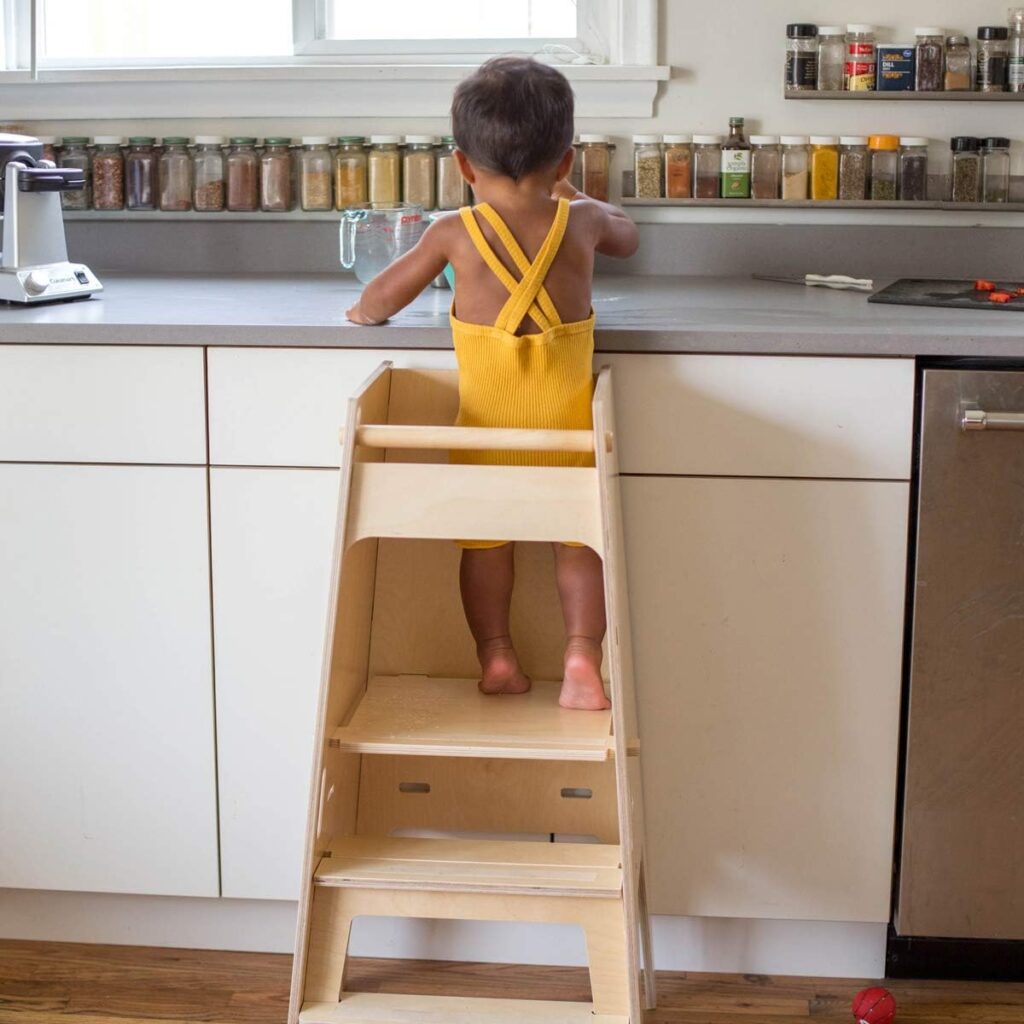
3. Sprout Sous-Chef Toddler Tower
Amazon Link: Click Here
Why it made our list: If safety is your number one concern (and let’s be honest, it should be), the Sprout tower might be your answer. This design features the most enclosed sides of any tower we reviewed, with tapered legs that create an extra-stable foundation. It’s specifically designed with the safety-conscious parent in mind.
What parents love: The enclosed design means even determined climbers have a harder time escaping to the counter. The compact footprint doesn’t overwhelm smaller kitchens, but the tapered base provides excellent stability. Parents report even very young toddlers (10-12 months) can use it safely once they’re standing confidently. The adjustable platform means it grows with your child for years.
What to consider: The more enclosed design means slightly less room for your toddler to move around inside the tower. Some parents wish it had more color options beyond the natural wood finish.
Best for: Parents with younger toddlers, families prioritizing maximum safety features, and anyone with a particularly adventurous climber.
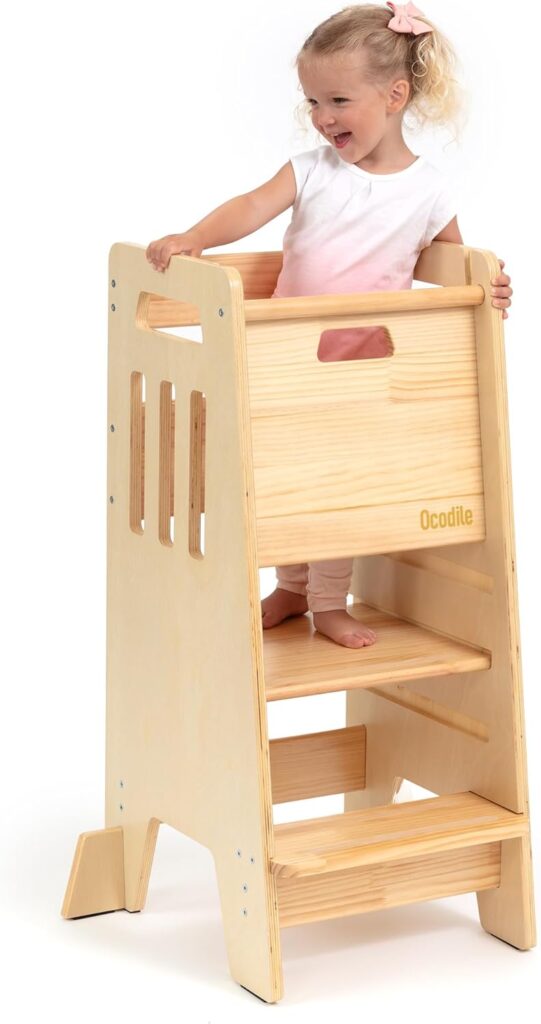
4. OCODILE Standing Tower with Door
Amazon Link: Click Here
Why it made our list: The unique door feature on this tower addresses a specific concern—toddlers who are nervous about open sides. The removable safety bars and door design give extra reassurance to both kids and parents. The recently updated design includes extra support feet based on parent feedback, showing the company actively improves based on real-world use.
What parents love: The door feature helps contain younger toddlers who might be anxious about the height. Assembly takes under 30 minutes with all tools included. The modern gray and natural wood combination looks stylish in contemporary homes. The adjustable platform accommodates kids from 18 months through age 5.
What to consider: The door adds a bit of bulk to the design. Some parents found the door mechanism takes kids a few days to learn to operate independently.
Best for: Families with cautious or anxious toddlers, parents who want extra containment for young beginners, and modern homes looking for stylish design.
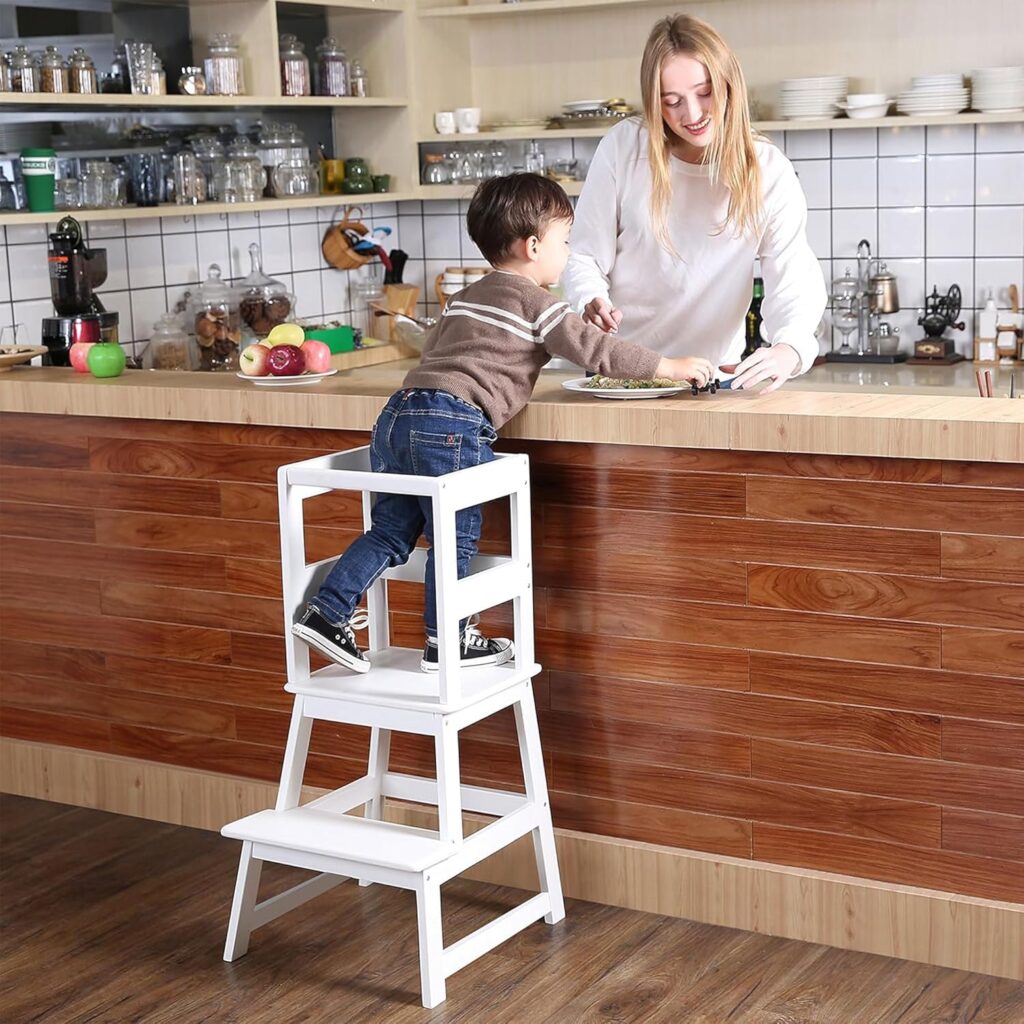
5. SDADI Kids Kitchen Step Stool with Safety Rail
Amazon Link: Click Here
Why it made our list: Let’s talk budget. Not everyone can drop $200 on a toddler tower, and that’s completely valid. The SDADI offers solid wood construction and four-sided safety rails at a fraction of the price of premium options. With overwhelmingly positive reviews mentioning sturdiness and quality, it proves you don’t always have to spend big for safe equipment.
What parents love: The price point makes it accessible to more families. Despite the lower cost, parents consistently report it feels sturdy and well-made. The natural wood finish is attractive, and it holds up to daily use surprisingly well. The durable, non-toxic coating means it’s safe for teething toddlers who like to chew on everything.
What to consider: This tower isn’t height-adjustable like more expensive options, so it might have a shorter usability window. The ladder-style side rails could make it easier for determined climbers to escape to the counter, requiring more vigilant supervision. It’s taller than some alternatives, making under-counter storage impossible in most kitchens.
Best for: Budget-conscious families, parents of slightly older toddlers (2+ years) who are past the most wobbly stage, and families who need a quality tower without the premium price tag.
What Actually Makes a Tower Safe
After reviewing safety test results and expert recommendations, here’s what you absolutely need to look for:
A wide, heavy base. The tower should feel solid and planted, not something your toddler could scoot across the room. A wider footprint and lower center of gravity dramatically reduce tipping risks.
Proper guardrail height. The top rail should sit above your child’s belly button when they’re standing on the platform. Too low, and it becomes a pivot point rather than a safety barrier.
No large cutouts or gaps. Solid sides or closely-spaced slats are much safer than towers with decorative openings where body parts could get stuck.
Adjustability without tools. Look for height adjustments that require tools to change. If your toddler can adjust it themselves, that’s a safety problem waiting to happen.
Quality materials and construction. Solid wood construction is generally more stable and durable than lightweight materials. Check reviews for complaints about wobbly construction or hardware that loosens quickly.
What to Do Once Your Tower Arrives (The Setup and Safety Checklist)
Getting a toddler tower is step one. Using it safely is where the real magic happens. Here’s your practical guide to making sure everything goes smoothly from day one.
Assembly and First-Time Setup
When your tower arrives, resist the urge to rush assembly. Take your time reading the instructions thoroughly. Double-check every screw and bolt—loose hardware is one of the main culprits in tower accidents. After initial assembly, give the tower a firm shake test. It should feel rock-solid with no wobbling or creaking.
Before your toddler’s first climb, place the tower on level ground away from the stove, windows, and counter edges. This is crucial. Even the sturdiest tower can’t overcome bad placement. The floor should be flat and stable—no rugs underneath that could slide.
Teaching Your Toddler Tower Safety
Your first few sessions should be learning opportunities, not work sessions. Show your child how to climb in and out properly, using the steps rather than scaling the sides. Make it a game—”Let’s practice going up and down!” This might feel tedious, but establishing good habits now prevents dangerous improvising later.
Set clear boundaries from day one. In our house, the rules are: bottoms stay on the platform, no standing on tiptoes to reach farther, and hands stay inside the rails unless we’re actively working with something. Your rules might differ, but consistency is key.
Supervision Is Non-Negotiable
Here’s something that can’t be emphasized enough: A toddler tower is not a containment device. Never, ever leave your child unattended in the tower. Not for “just a second” to grab something from another room. Not when they seem perfectly content. The tower brings your child to counter height where hot stoves, sharp knives, and heavy objects become accessible. Your presence within arm’s reach is essential every single time.
Maintenance and Regular Safety Checks
Once a week, do a quick inspection. Tighten any screws or bolts that might have loosened from regular use. Run your hand over wooden surfaces to check for splinters or cracks. Give the tower that shake test again—if anything feels different, investigate before your next use.
As your child grows, adjust the platform height to keep the top rail above their belly button. This might mean adjustments every few months during growth spurts.
Making the Most of Your Toddler Tower (It’s More Than Just a Kitchen Tool)
Once you’re comfortable with safety basics, the real fun begins. Your toddler tower opens up a world of learning opportunities that go way beyond helping cook dinner.
Kitchen Activities That Build Real Skills
Start simple with washing vegetables (toddlers love water play, and it’s genuinely helpful). Move on to stirring cold ingredients, pouring premeasured items into bowls, and helping set the table with unbreakable dishes. As they grow, they can help with more complex tasks like spreading soft butter, mashing bananas, or decorating cookies.
The developmental benefits are real. Fine motor skills improve through pouring and stirring. Following recipe steps builds sequencing abilities. Measuring ingredients introduces early math concepts. And the confidence boost from “I helped make dinner!” is priceless.
Beyond the Kitchen
Your tower isn’t limited to cooking. Bring it to the bathroom for tooth brushing independence (no more back-breaking toddler holds over the sink). Use it at craft tables for painting, coloring, or playdough activities. Some families even use it for outdoor activities like helping at a potting bench or bird feeder.
The Bottom Line: Is a Toddler Tower Worth It?
After months of use, research, and talking to dozens of parents, my answer is an emphatic yes, with important qualifications. A quality toddler tower can genuinely transform your daily routine, giving your child safe access to participate in real activities while giving you back your hands and your sanity.
But “quality” is the operative word here. The cheap, wobbly towers flooding the market aren’t just bad investments; they’re potentially dangerous. Spending extra for a well designed, stable tower with proper safety features isn’t optional; it’s essential.
The towers I’ve recommended above all meet rigorous safety criteria, have strong parent reviews, and come from companies that stand behind their products. Start with one of these, follow safety guidelines religiously, and you’ll understand why so many parents call their toddler tower one of their best purchases.
Your toddler’s independence is developing whether you’re ready or not. A good tower gives you a way to support that development safely, turning the exhausting “I want to help!” phase into an opportunity for real connection and learning. And honestly? Those moments of cooking side by side, watching their face light up when they successfully pour something without spilling, or hearing them proudly tell dad “I helped make dinner!” Those moments make every penny worth it.
Ready to bring a toddler tower into your home? Start with the Little Partners Original Learning Tower if budget allows, or the SDADI option if you’re looking for affordable quality. Either way, you’re taking a major step toward safer, more peaceful mealtimes and a more confident, capable toddler.
Have questions about toddler towers? Drop them in the comments below. I read and respond to every one, and your question might help another parent facing the same decision.
Keywords: toddler tower, learning tower, kitchen helper stool, toddler kitchen stool, Montessori tower, toddler step stool with rails, best toddler tower 2026, safe toddler tower, Little Partners learning tower, foldable toddler tower, toddler tower safety
